How Many Letters Are in the Russian Alphabet? 33, and Why
There are 33 letters in the Russian alphabet: 10 vowels, 21 consonants and 2 signs that have no sound of their own.
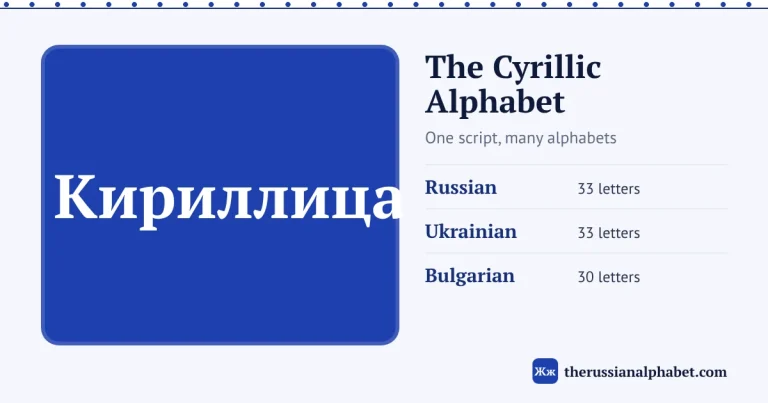
33 letters. The count has stood since the 1918 spelling reform, which removed four older letters, with ё counted as a full letter of its own. English has 26, Ukrainian 33, Belarusian 32 and Bulgarian 30.
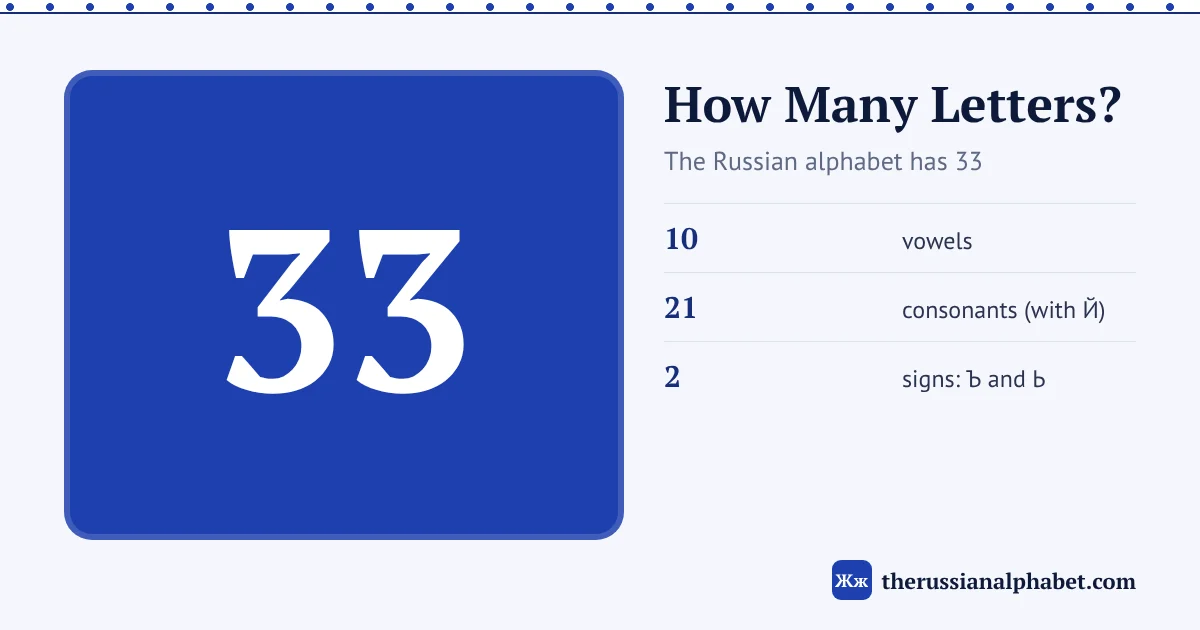
The breakdown: 10 vowels, 21 consonants, 2 signs
| Group | Count | Letters |
|---|---|---|
| Vowels | 10 | а е ё и о у ы э ю я |
| Consonants | 21 | б в г д ж з й к л м н п р с т ф х ц ч ш щ |
| Signs | 2 | ъ ь |
| Total | 33 |
A few details explain the numbers:
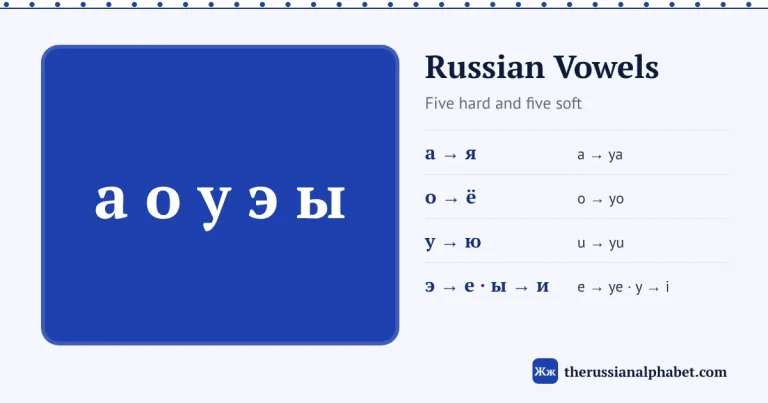
- The 10 vowels form five pairs: а/я, э/е, ы/и, о/ё, у/ю. The second letter in each pair softens the consonant before it or adds a y sound. The Russian vowels guide explains how.
- Й (i kratkoye, “short i”) is a semivowel, the y in “boy”. It is counted with the consonants, as in (chay, tea).
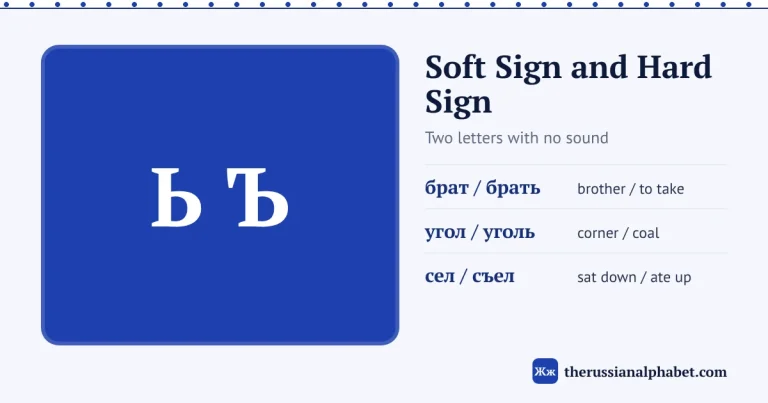
- The two signs, ъ (hard sign) and ь (soft sign), are full letters of the alphabet but have no sound. They change how the letters around them are read: compare (brat, brother) and (brat’, to take). See soft sign and hard sign.
To see and hear all 33 in alphabetical order, open the interactive Russian alphabet chart.
Why some sources say 32
You will occasionally see 32. There are two reasons. Some references do not count a sign as a true letter: the Encyclopaedia Britannica entry on Cyrillic says modern Russian has 32 letters, or 33 if the soft sign is included. Others treat ё as е with an optional mark, because in everyday print it usually appears without its dots. Russian school textbooks and dictionaries count both signs and ё, which gives 33.
The 1918 spelling reform: four letters removed
The modern alphabet is the result of a spelling reform that had been discussed by scholars since the early 1900s and was put into force by the Soviet government in 1918. According to The Moscow Times’ account of the reform, it removed four letters judged redundant, because each stood for a sound another letter already covered:
| Removed letter | Old name | Replaced by |
|---|---|---|
| Ѣ ѣ | ять (yat’) | е |
| І і | и десятеричное (i desyaterichnoye, “decimal i”) | и |
| Ѳ ѳ | фита (fita) | ф |
| Ѵ ѵ | ижица (izhitsa) | и |
The reform also stopped the hard sign being written at the end of words that end in a hard consonant, so хлѣбъ became (khleb, bread). The letter ъ itself stayed in the alphabet for its separating role, as in (s”yel, ate up).
The story of ё, the 7th letter
Ё dates to a meeting of the Russian Academy in 1783, when its president, Princess Yekaterina Dashkova, proposed writing the word for “fir tree” with a single new letter instead of the two-letter combination used until then. The writer and historian Nikolai Karamzin later did much to spread it, and is often called the letter’s godfather; Scientific Russia gives the date as 29 November 1783 (18 November in the calendar then used in Russia).
For most of its life ё has been optional in print. During the Second World War it was made compulsory in schools and publishing, but publishers soon dropped it again. The spelling rules adopted in 1956, which are still in force, make it required only where a word could otherwise be misread (все, “everyone”, versus , “everything”), in dictionaries, in children’s books and in texts for learners. That is set out in an article by the Russian Academy of Sciences’ Vinogradov Institute (PDF, in Russian). Ё is always stressed, which is why learner texts keep it: (yolka, fir tree or Christmas tree; stress: YOL-ka).
The missing dots affect English spellings too. Горбачёв is pronounced “Gorbachyov”, but the name was usually printed without the dots and entered English as Gorbachev. Try both spellings in the Russian transliteration tool.
How 33 compares with other alphabets
Russian shares the Cyrillic script with several other languages, but each has its own set of letters. Equal totals do not mean equal letters.
| Alphabet | Letters | Compared with Russian |
|---|---|---|
| Russian | 33 | |
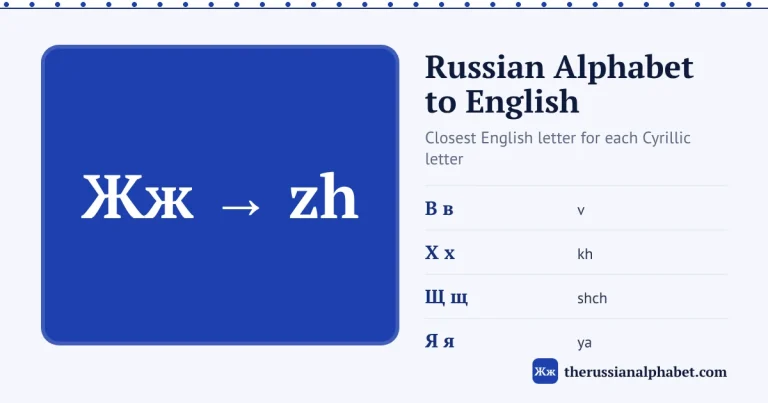
| English | 26 | Latin script; no single letters for sounds like zh, ts, ch, sh or shch |
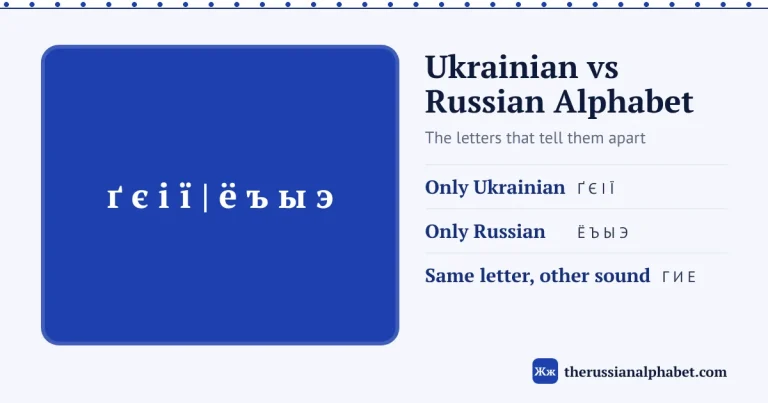
| Ukrainian | 33 | Has ґ є і ї; has no ё ъ ы э |
| Belarusian | 32 | Has і and ў; has no и щ ъ, and uses an apostrophe (not counted as a letter) where Russian uses ъ |
| Bulgarian | 30 | Has no ё ы э; ъ is a vowel in Bulgarian |
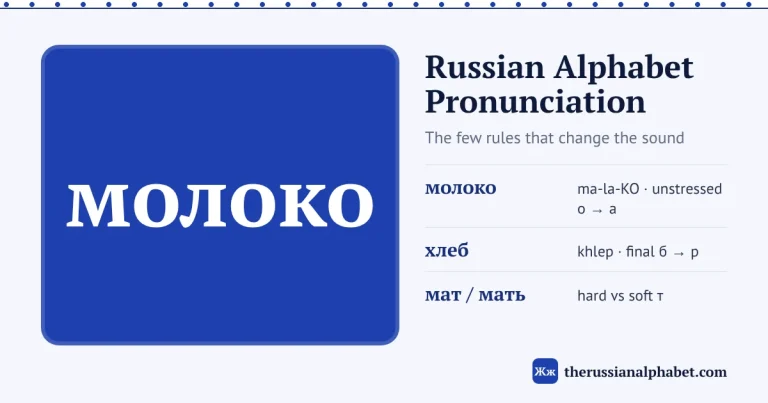
The same Cyrillic letter can also sound different from one language to the next: Ukrainian и is close to Russian ы, for example. The Ukrainian vs Russian alphabet comparison goes through every difference, and the Cyrillic alphabet page covers the script’s history.
FAQ
How many vowels and consonants are in the Russian alphabet?
10 vowels and 21 consonants. The remaining 2 letters, ъ and ь, are signs with no sound of their own.
Did the Russian alphabet always have 33 letters?
No. Before the 1918 spelling reform it also included ѣ, і, ѳ and ѵ, which the reform removed. The modern count of 33 includes ё, which was introduced in 1783.
Is ё a separate letter?
Yes. It is the 7th letter of the alphabet, between е and ж. In everyday texts it is often printed as е without the dots, but it is required where a word could be misread and in dictionaries and learner texts.
Which alphabet has more letters, Russian or Ukrainian?
They have the same number, 33, but not the same letters. Ukrainian has ґ, є, і and ї, while Russian has ё, ъ, ы and э.
- АаRussian alphabet to EnglishAll 33 letters with English equivalents and audio.
- ЇїUkrainian vs Russian alphabetLetter-by-letter differences between the two.
- ЁёRussian alphabet quizCheck you know all 33 letters by shape and sound.